Have you ever heard a song and wondered where that shimmery, otherworldly sound came from? Chances are you were listening to a synthesizer. For anyone stepping into music production, composition and songwriting, understanding this instrument opens up a multiverse of sonic options. In this article, we’ll break down all the components that make up a synthesizer starting with the basics: what is a synthesizer, really, and why does it matter so much in modern music?
What is a Synthesizer?
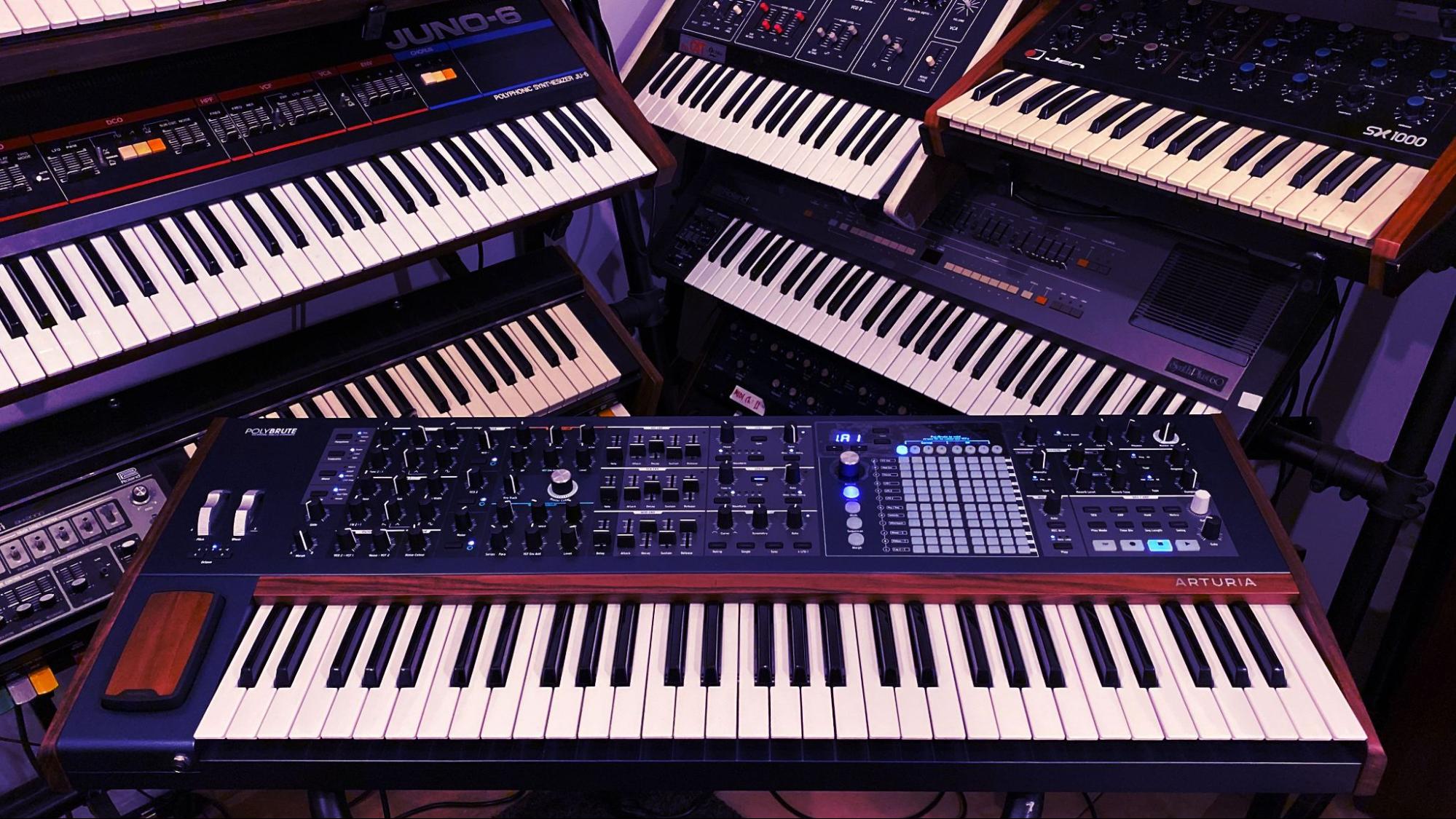
At its core, a synthesizer is an electronic instrument that creates sound by generating and shaping electrical signals, rather than relying on the vibration of strings, reeds, or air columns like traditional musical instruments. Instead of a wooden body or a stretched membrane, a synthesizer employs circuits, oscillators, and software algorithms to build sound from scratch.
This is really the simplest way to answer the question “what are synthesizers”; they’re sound generators essentially. A guitar makes sound because a string vibrates. A piano makes sound because a hammer strikes a string. A synthesizer, on the other hand, makes sound because an electronic circuit produces a waveform, which is then shaped and modified to create music.
Breaking Down the Meaning of Synthesizer
To fully grasp the synthesizer meaning, it helps to look at where the word comes from. To “synthesize” means to combine different elements to form something new. In the context of music, a synthesizer combines basic building blocks of sound, like waveforms, frequencies, and filters, to construct entirely new tones that don’t exist naturally in the physical world.
Thinking of it like a chef in a kitchen helps. For instance, a traditional instrument is like a single, fixed ingredient; it always tastes the same. Now on the other hand, a synthesizer, though, is like a spice rack, a set of mixing tools, and an oven, all in one. It gives you raw ingredients (basic waveforms like sine, sawtooth, square and triangle) and lets you combine, cook, and season them into an infinite variety of sonic “dishes.”
How Does a Synthesizer Instrument Actually Work?
Every synthesizer instrument, whether it’s a vintage analog machine from the 1970s or a modern software plugin on your laptop, generally works through a combination of a few key stages:
1. Oscillators: This is where the synth journey begins. Oscillators generate raw waveforms like sine, square, sawtooth, or triangle waves. Each shape has its own unique tonal character; a sine wave sounds smooth and pure, while a sawtooth wave sounds bright and buzzy.
2. Filters: Once a waveform is generated, filters shape its tone by cutting or boosting certain frequencies. This is how a synthesizer instrument can go from sounding harsh and metallic to warm and mellow.
3. Amplifiers and Envelopes: These functions control how the volume of a sound changes over time. Does the note snap in instantly, as soon as the key is struck or or does it fade in slowly? Does it cut off abruptly, or does it linger and decay naturally? This shaping feature is called an envelope, often described using four stages: Attack, Decay, Sustain, and Release (ADSR).
4. Modulation: Elements like LFOs (Low-Frequency Oscillators) add movement to a sound, creating effects like vibrato, tremolo, or evolving textures that shift over time. This is key for breathing life into static sounds.
Put together, these stages let a producer sculpt sound with incredible precision, which is exactly why synthesizers have become central to nearly every modern genre.
Types of Synthesizers You Should Know
- Analog Synthesizers: These use physical electronic circuits to generate sound. They’re prized for their warm, organic tone and hands-on knobs and sliders that offer a tactile approach.
- Digital Synthesizers: These use computer processors to calculate and generate waveforms, offering more flexibility and precision.
- Software Synthesizers (VSTs): These live entirely inside your computer or DAW, letting producers access powerful sound design tools without needing any physical hardware.
- Modular Synthesizers: These are built from separate components that are connected using patch cables, offering limitless creative possibilities.
Understanding Synth Music
When people talk about the meaning of synth music, they’re usually referring to any music genre or style that heavily features synthesizers as a core instrument. This includes genres like synth-pop, electronic dance music (EDM), techno, house, and much of contemporary pop and hip-hop production. Synth music isn’t defined by a single sound, it’s defined by the use of electronically generated tones as a primary building block of the composition.
From pulsing basslines in house music to dreamy pads in ambient tracks, synth music spans an enormous emotional and stylistic range. And that’s exactly what makes synthesizers so exciting to learn: they aren’t tied to one genre or mood. They’re a blank canvas waiting for you to unleash your creativity.
Why Synthesizers Matter for Aspiring Producers
If you’re serious about getting into modern music production, understanding synthesizers isn’t optional; it’s essential. Nearly every modern track, regardless of genre, uses some form of synthesized sound, whether it’s a bassline, a pad, a lead melody, or subtle background texture. Learning how oscillators, filters, and envelopes work together gives you the power to create original sounds instead of relying solely on presets or templates.
Moreover, synthesizers teach you to think about sound in a more technical and intentional way. Instead of simply choosing an instrument, you learn to build one from the ground up, shaping every sonic detail to match the energy of your track.
Final Thoughts
So, what is a synthesizer at the end of the day? It’s not just a keyboard with a bunch of strange buttons and knobs, it’s a vital tool for sonic exploration. It bridges the gap between imagination and sound, letting you create tones that no acoustic instrument ever could. Whether you’re producing electronic dance tracks, writing pop songs, or simply curious about the tools shaping modern music, learning the fundamentals of synthesis will fundamentally change the way you hear and make music.
As you continue your journey into music production, spend time experimenting with different synthesizers, whether hardware or software. The best way to truly understand synthesis is to get hands-on, tweak some knobs, and listen closely to how each parameter changes the sound. That’s where the real learning begins.
If you’re ready to experiment with different synthesizers and start sculpting your signature sound with intent, the 6-Month Music Production Course at Compass Box Music Academy in Ahmedabad is your next step. The program dives deep into the heart of sound design, teaching participants how to use synthesizers creatively rather than just technically. You will learn how to manipulate waveforms, filters, and modulation to build original textures, driving basslines, and lush cinematic patches entirely from scratch, turning synth into a true extension of your musical voice.

 Audio Fundamentals