




Part Studio
Part Label
Wholly Indie
Part Studio
Part Label
Wholly Indie

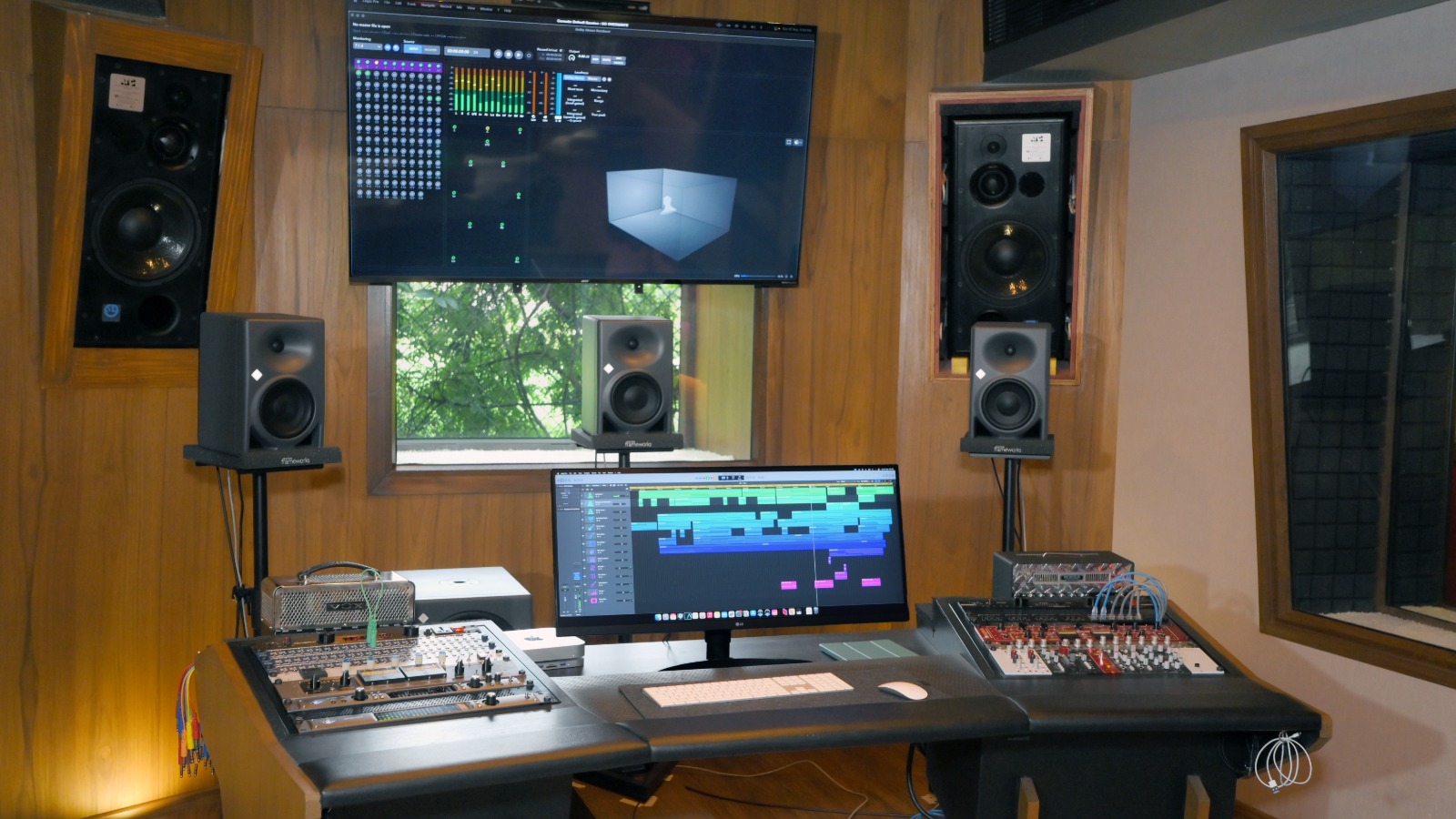
Before we dive into the core concept of spatial audio, let’s do a small visualisation exercise. Imagine a live concert where a band is playing on stage and you are standing in the audience. You are zoned in on the performance, your eyes closed, and yet somehow you can still tell quite accurately where the drummer is sitting, where the guitarists and vocalist are standing and the noise of the crowd behind you. This sense of place inside sound is something that traditional stereo mixes over the years have always struggled to fully recreate. And that’s exactly where spatial audio comes in.
If you’re an aspiring producer, songwriter, or even just someone who loves good sound, understanding spatial audio will change the way you think about mixing forever.
To put it simply, spatial audio is a type of music technology that enables mix engineers to position sounds in a three-dimensional space around the listener, rather than confining everything to just the left and right channels of traditional 2-channel stereo audio. With spatial audio, the mix engineer gets to assign different elements within a mix to feel like they are coming from above, below or even behind you, creating a captivating listening experience.
Think about it this way; conventional traditional stereo is like a flat photograph print compared to spatial audio which is more like a 3-D movie. On capturing the same scene, the latter will give you far more depth, dimension and realism.
To grasp the meaning of spatial sound, you could think about how we naturally hear the world around us. In reality, sound doesn’t just hit your left and right ear differently, but it also varies based on your height, the distance between you and the source sound and most importantly, the space within which you are listening. Our brain does a remarkable job of summing and mapping all these tiny differences which helps us perceive our surroundings.
Spatial sound basically tries to recreate that same, natural listening experience, digitally. By using multiple audio channels, metadata and advanced processing techniques, mix engineers or producers are able to place individual instruments, vocal layers and other elements within a song at specific points in a 3-dimensional field. A hi-hat may sit above and slightly to the right while a background vocal could swirl behind the listener. The resulting mix is an auditory adventure that feels less like something played ‘at’ you but more like something happening ‘around’ you.
Like we mentioned above, the human ear is remarkably good at detecting spatial cues. Even without any voluntary thought or effort, we constantly process the direction, distance, depth and timbre of sounds that we hear to understand and interact with our physical surroundings. Traditional stereo mixing, while effective, only works within a narrow left-right plane, never fully tapping into how we actually perceive sound.
Spatial audio changes this completely by working with our natural hearing instincts. This is the reason why you may describe your listening experience with spatial audio as ‘immersive’ and ‘wider’. With so much room for different elements, instruments can breathe and the vocals feel more present. Time-based effects such as reverbs and delays also tend to sound significantly more natural as they’re closer to emulating a physical space rather than being squashed into just two channels.
It doesn’t come as a surprise then, that formats built around spatial audio, like Dolby Atmos are steadily gaining relevance, not just in film-making and OTT, but increasingly in music streaming as well. Listeners can hear layers and uncover details in familiar songs with more clarity that may have been previously buried in standard stereo mixes.
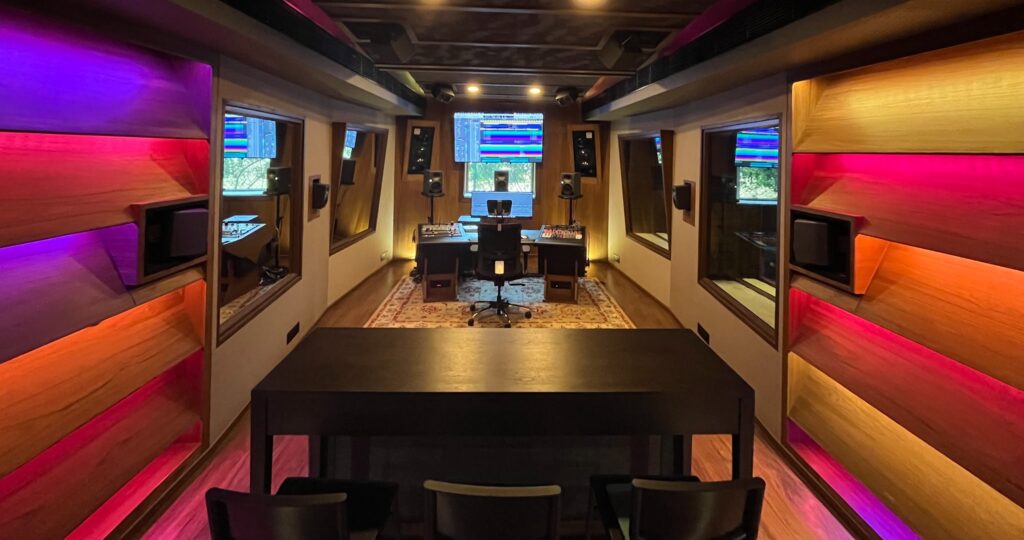
The fully Neumann-powered 7.1.4 Atmos room at Compass Box Studio
If you’re a music producer or a mixing engineer eager to dabble in surround mixes but have only used stereo until now, you should know that the transition requires a mindset shift. Instead of just panning instruments and other elements to the standard left and right channels, you could now start thinking of their positions within a full sphere around your ears.
Here are some handy spatial audio techniques:
There’s no doubt that this approach requires new tools and formats, but the creative payoff is totally worth the buck. Songs feel more cinematic, possess great emotional depth, and are more engaging when spatial audio techniques are used thoughtfully rather than just a gimmick.
You don’t need to master spatial audio overnight, but understanding the concept early will give you a real advantage. As more streaming platforms and playback systems support immersive formats, artists who know how to think spatially will have more creative options and a sharper competitive edge.
While you don’t really need to master the art of spatial audio overnight, understanding the concept alone is bound to give you a real advantage. As more digital streaming platforms and audio playback devices support immersive audio formats, artists who know spatial audio will have more creative options at their disposal.
Even if you are primarily working with stereo channels right now, training your ear to notice depth, height, and space in the music you listen to will make you a better mixer overall.
Spatial Audio isn’t just a fad or a passing trend. It reflects a genuine shift in the fundamental relationship between the listener and recorded sound. By challenging the limitations of conventional stereo channels, the listener is closer to how we perceive sound naturally thus elevating the cinematic experience.
To truly harness the potential of spatial audio, artists, producers and mixing engineers need studio environments designed from the ground up to handle this new dimension of audio mixing. Learn how to take your mixes to the next level at Music Academy in Ahmedabad which features a fully compliant 7.1.4 Dolby Atmos environment, bridging the gap between raw creative vision and absolute technical precision.
To see this cutting-edge space in action, take the Ultimate Atmos Recording Studio Tour at Compass Box Studio.