




Part Studio
Part Label
Wholly Indie
Part Studio
Part Label
Wholly Indie

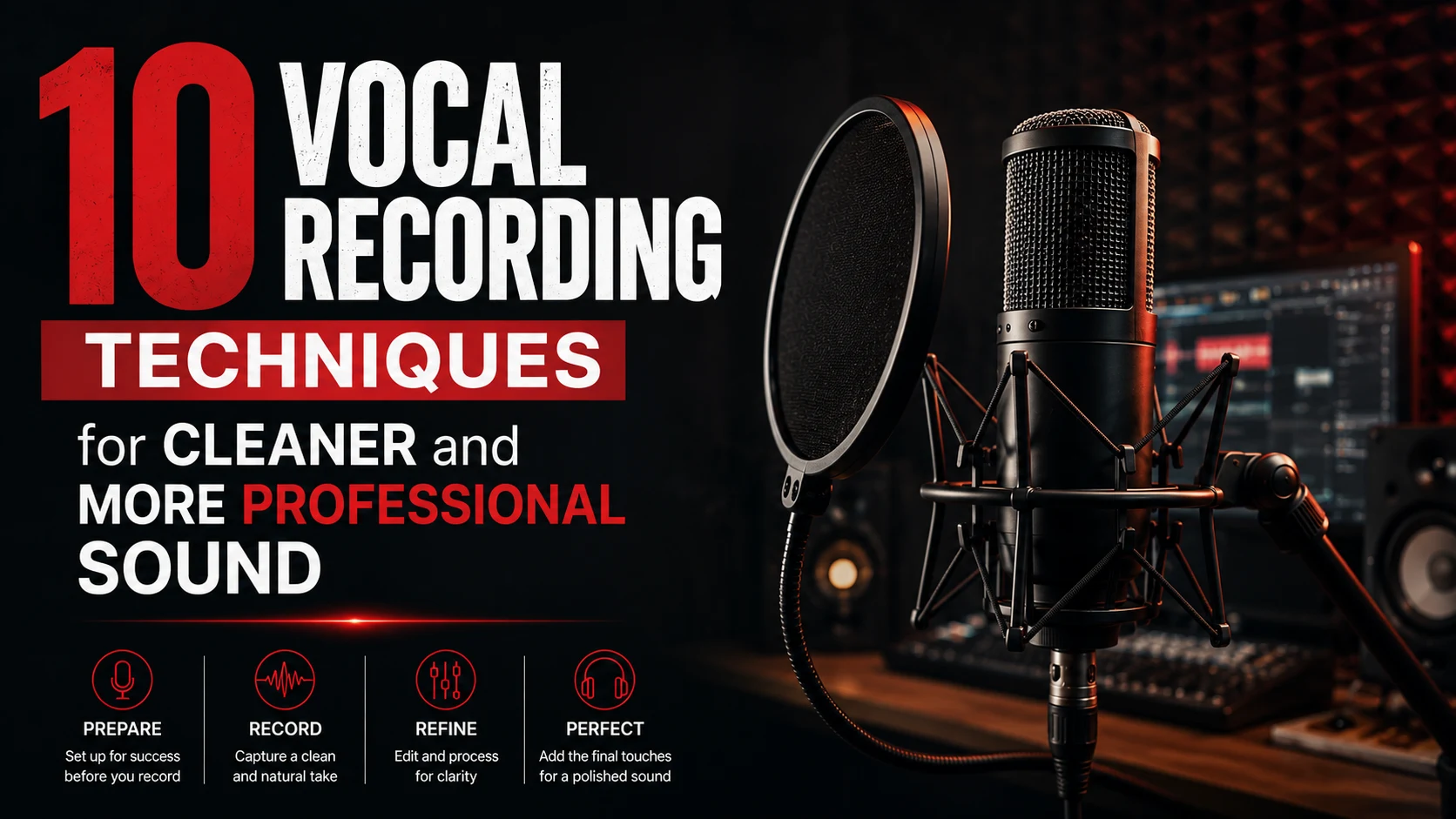
A great vocal recording can make or break a song. Even the best mix engineer cannot fully fix a poorly recorded vocal. Whether you are recording in a professional studio or a home setup, getting a clean vocal from the start saves time and improves the final result.
Here are 10 practical vocal recording techniques to help you capture cleaner, sharper, and more professional-sounding vocals.
Not every microphone works the same for every voice. Some mics highlight brightness, while others add warmth.
A condenser microphone is usually the go-to choice for vocals because of its sensitivity and clarity. Dynamic microphones can also work well, especially for aggressive vocals or untreated rooms.
Before recording, test different microphones if possible and choose the one that suits the vocalist’s tone.
Plosive sounds like P and B can create unwanted bursts of air that distort recordings.
A pop filter helps reduce these harsh sounds before they hit the microphone. It also allows the singer to maintain a comfortable distance from the mic.
Keep the pop filter around 2–4 inches away from the microphone for best results.
Distance matters more than most beginners realize.
Standing too close can cause excessive bass buildup (proximity effect), while standing too far can make vocals sound thin and weak.
A good starting point is about 6 to 8 inches from the microphone.
Consistency is key—try to maintain the same distance throughout the performance.
Room acoustics directly affect vocal quality.
Even expensive microphones cannot fix a bad-sounding room. Reflections, echoes, and outside noise can ruin takes.
Use:
A dry, controlled room will always produce cleaner vocals.
One of the biggest recording mistakes is setting gain too high.
If the signal clips, the recording is permanently damaged.
Aim for peaks between -12dB to -6dB. This gives enough headroom while keeping the signal strong.
Always do a test recording before the final take.
Speaker playback can leak into the microphone and create unwanted background noise.
Closed-back headphones are ideal for recording because they isolate sound and reduce bleed.
Make sure the headphone volume is comfortable but not too loud.
A cold voice can sound stiff and inconsistent.
Simple vocal warmups improve control, pitch accuracy, and stamina.
Spend 10–15 minutes on:
This helps deliver better takes and reduces vocal strain.
Heavy breaths, sudden movements, and body noise can easily get picked up.
Train the vocalist to:
These small habits make a big difference.
Rarely does the perfect take happen in one go.
Recording multiple takes gives you more options for comping the best parts later.
Try:
This gives flexibility during editing.
Using light compression while monitoring can help singers feel more confident and consistent.
Keep it subtle:
Avoid over-processing during recording. It’s better to keep the raw vocal natural.
Clean vocals start long before mixing begins. The right microphone, room setup, gain staging, and performance techniques all play a huge role in the final sound.
Focus on capturing the best possible performance at the source. It will make your mixing process smoother and your final track sound far more professional.
At Compass Box Studio, we work closely with artists to capture vocals that feel authentic, polished, and ready for release. Whether you’re recording your first single or your next big project, getting the foundation right always matters most.